High habitat in low places
Some forms of management works can look very drastic, but in the right conditions they are a long term benefit to the tree and the wider environment.
Hedges
Not all trees grow tall! Some species can be trained under certain conditions to grow low creeping forms, People have been growing trees into linear forms to keep in livestock or keep out threats for thousands of years. This boundary management has selectively bred species to be dense, hardy to grazing and extremely resilient to mechanical deformation. The humble British hedges have defined cultural and environmental boundaries for as long as humans have lived here!
More from the woodland trust here

Coppicing
Some tree species thrive under these managed conditions, Some species benefit from the almost total removal of their above ground material, Hazel is an excellent example, With regular cutting the root plate stays alive for many rotations. The life expectancy of a species can be drastically improved with such methods. There is a lime coppice in the UK estimated to be 9000 year old, Hazel ‘stools’ can grow to be ancient despite a nominal lifespan of 70 to 80 years. This rejuvenation mechanism can be utilised in urban garden bringing new shoots to old roots.
More from the national coppice federation here

Pollards
.Trees by their nature, grow to a position that allows them best access to light. For most species the behaviour that achieves this by growing tall. Mechanically, this usually very successful strategy can increase loads on weak unions and catch high wind forces increasing the range of risk to people and property.
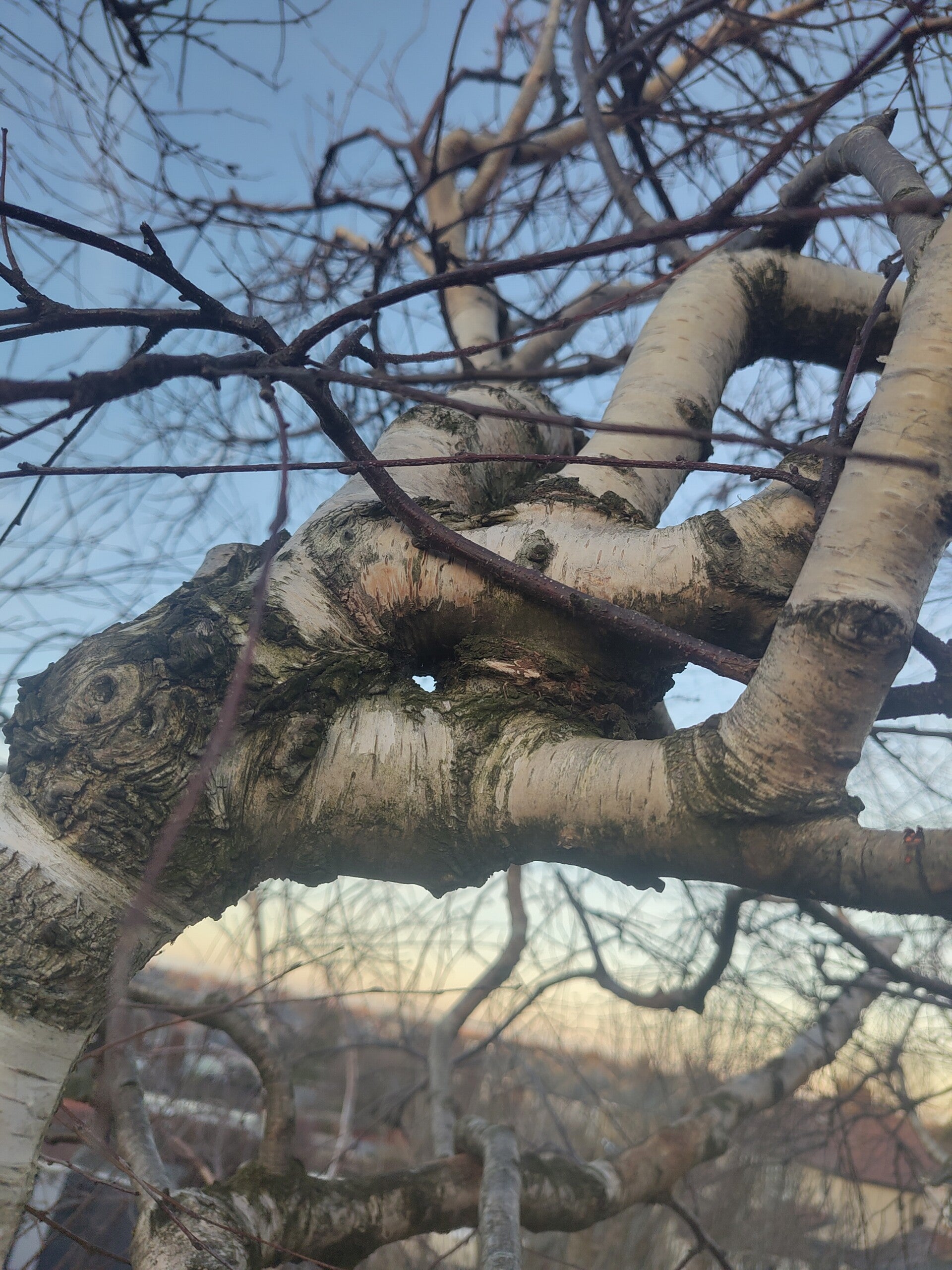
Pollarding is the practice of cutting a tree's main stem and establishing a top height,
The tree then ideally grows branches from the area the stem was cut. This limits further upward growth and creates an even canopy. By managing tree terminal height the lifespan of trees can be increased significantly while minimising material risk. It is a valuable method for long term urban tree management.
Some information from Wirral council can be found here